
English: 7th grade 14 Sections44 Lessons365 Days
1.1. Listening and Speaking Lesson
Indigenous Knowledge in Ethiopia | English Seventh Grade
Lesson Competencies
At the end of the lesson you will be able to:
Listen for specific details about indigenous knowledge.
Connect information from a listening passage to your own personal life.
Discuss the role of rural people in maintaining traditions.
Use linking devices like ‘but’, ‘however’, and ‘although’ to express contrast.
Pronounce the interdental voiced /ð/ (this) and voiceless /θ/ (think) sounds correctly.
Key Terms
Indigenous Knowledge
Knowledge and practices developed by local communities over generations.
Elders
Respected older people in a community who hold and pass on wisdom.
Oral Tradition
Sharing stories, history, and knowledge by speaking instead of writing.
Heritage
Valued traditions and qualities passed down from previous generations.
Contrastive Linkers
Words like ‘but’, ‘however’, and ‘although’ that connect opposing ideas.
Interdental Sounds
The sounds /θ/ and /ð/ made with the tongue between the teeth.
Core Lesson
Pre-listening Activities
Dear learners,
Think about where we get information. We often use books or the internet. But what about the knowledge our grandparents and elders hold? This is called indigenous knowledge. It is the wisdom passed down through generations, often in rural communities.
Brainstorming Scenario
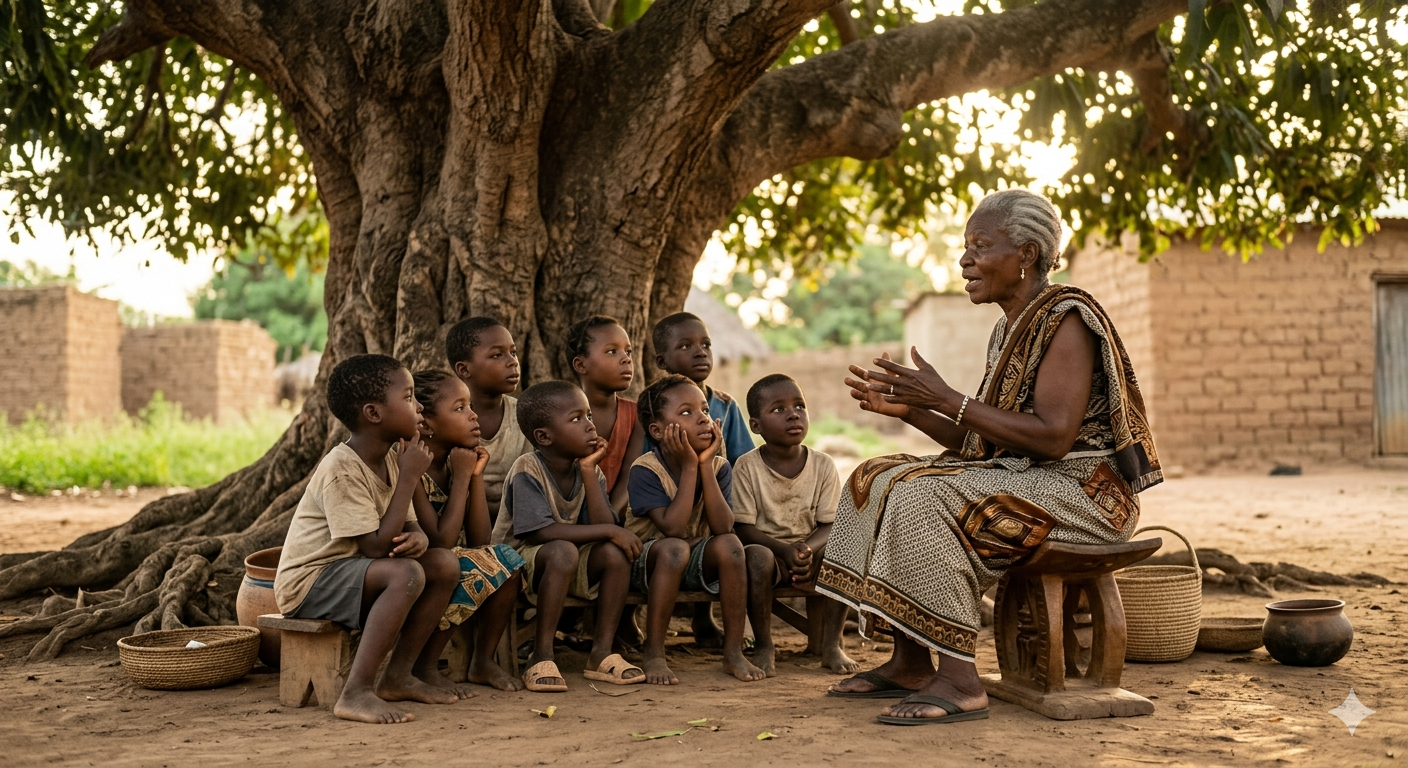
Imagine sitting with your grandmother, or ‘Emama’, as she tells you a story her own grandmother told her. This is oral tradition, and it is a powerful way our heritage is kept alive.
While You Listen
You are going to listen to a short story about a boy named Dereje visiting his grandfather. As you listen, try to find the answers to these questions:
- What special skill does Ato Lemma have?
- How did Ato Lemma learn this skill?
- Why does Ato Lemma believe his knowledge is important?
Listening Practice
Listen to the passage about indigenous knowledge and answer the questions.
Listening Script:
“Dereje went to visit his grandfather, Ato Lemma, in a small village in the Gamo Highlands. Ato Lemma doesn’t read books about weather, but he can predict the rain by watching the behaviour of birds and the direction of the wind. This is indigenous knowledge. He explained to Dereje, ‘My father taught me this, and his father taught him. It is our way of understanding the land. These traditions are important because they have helped our people farm and survive for many, many years. Although modern technology is useful, we must not forget the wisdom of our ancestors.'”
Speaking Practice
Practice speaking about the topics below. Press the microphone to record your answer for each prompt.
Mixed Challenge Activity
Test your knowledge with different types of questions.
Lesson Summary
Indigenous knowledge is the traditional wisdom held by local communities, especially in rural areas.
Elders are the guardians of this knowledge, passing it down through oral tradition.
This knowledge is a vital part of Ethiopia’s rich heritage and helps communities understand their environment.
We use contrastive linkers like ‘although’, ‘but’, and ‘however’ to compare traditional and modern ideas.
Practicing sounds like the /θ/ and /ð/ in ‘think’ and ‘this’ helps us communicate clearly.
Final Assessment
Listen to the new passage and answer the questions.
Assessment Script:
“Traditional medicine in Ethiopia is a form of indigenous knowledge. Many rural people learn about healing plants from their parents. For example, the leaves of the ‘damakese’ plant are often used for fever. However, this knowledge is not usually written in books; it is passed from person to person. Although many people use modern hospitals today, traditional remedies are still very important for communities, especially for those living far from cities. These two systems of medicine can exist together to help people.”
Competency Checklist
Check off each competency as you master it: