
Biology: Grade 12 8 Sections79 Lessons365 Days
1.1. Application In Conservation Of Natural Resources
Application In Conservation Of Natural Resources
Biology Grade 12
Lesson Competencies
At the end of the lesson you will be able to:
- Define conservation and natural resources.
- Differentiate between renewable and non-renewable resources using Ethiopian examples.
- Understand the role of conservation biology in protecting biodiversity.
- Analyze the economic and environmental impacts of managing natural resources.
Key Terms
Conservation
The careful maintenance and wise use of natural resources to prevent them from disappearing.
Natural Resources
Physical supplies existing in nature including soil, water, air, plants, animals, and energy.
Renewable Resources
Resources that can be used, reused, and replaced when managed carefully (e.g., solar, biomass).
Non-renewable Resources
Finite natural substances not replaced at the speed they are used (e.g., gold, fossil fuels).
Video Lesson: Conservation
Watch this educational video to better understand the vital importance of conserving natural resources and visually reinforcing the differences between renewable and non-renewable assets.
Reflection Question
After watching the video, can you name one everyday action you can take to conserve renewable resources (like water or forests) in your local community?
Core Lesson: Preserving Our Natural Heritage
Introduction
Dear learners, Imagine waking up to the roaring sound of Tis Abay (the Blue Nile Falls). You step outside and drink a fresh cup of coffee grown in the shaded highlands, listening to the call of the Ethiopian Bush crow. The water, the coffee plants, the rich soil, and the birds are all vital parts of our ecosystem. But what happens if we use them up without thinking about tomorrow?
What is Conservation?
Conservation is the careful maintenance and wise use of natural resources to prevent them from disappearing. Conservation biology is a mission-oriented science that focuses on how to protect and restore biodiversity (the diversity of life on Earth).
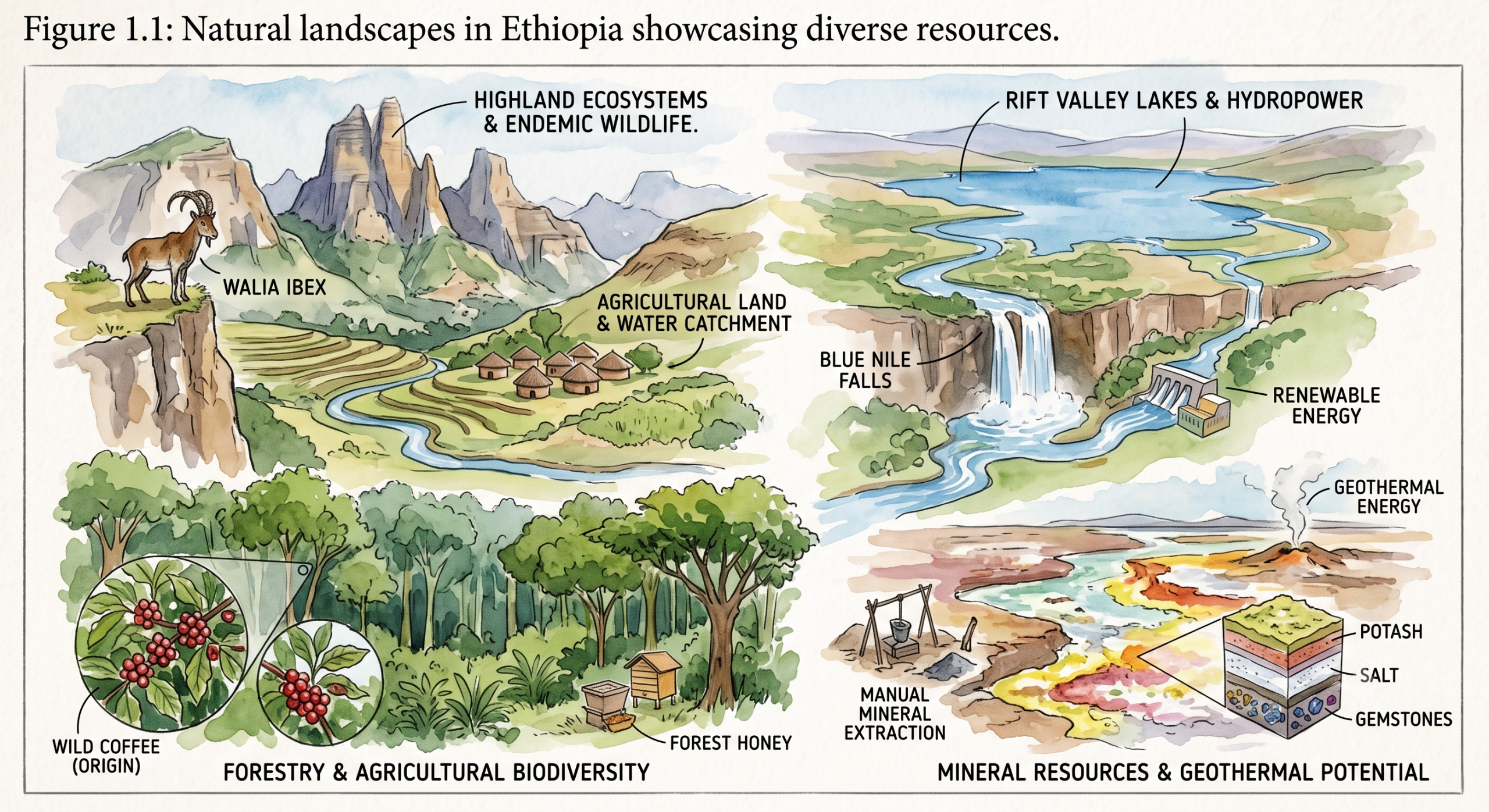
Ethiopia’s Wealth of Resources
Ethiopia is gifted with abundant natural resources. These physical supplies exist in nature and can be divided into two main categories:
Renewable
Mainly living things and endless natural energies. They can be replaced if managed carefully.
- Sun, wind, & water
- Geothermal heat
- Biomass (crop plants, timber)
- Animals (livestock, wildlife)
Non-Renewable
Finite substances that are used up much faster than nature can replace them.
- Metals (gold, platinum)
- Minerals (potash, limestone)
- Fossil fuels (natural gas, coal)
The Biologist’s Role in Management
Conserving non-renewable resources like fossil fuels is economically advantageous, but mining and burning them has a severe negative impact on the earth, causing climate change. Using renewable energy sources is more beneficial to the planet.
However, even renewable resources can be lost! To conserve trees, we use methods like coppicing (cutting a tree to ground level to stimulate growth) and continuous planting. Biologists save species from extinction by preserving them in zoos and seed banks (like the Ethiopian Biodiversity Institute), and by stopping the destruction of natural habitats.
Visualizing Ecosystems
Resource Sorter Game
Score: 0/5Tap a resource card below, then tap the correct category box to sort it!
Renewable
Non-Renewable
Resources to Sort
Activity 1: Knowledge Check
Question text goes here?
Activity 2: Missing Words
Tap a word from the bank below to fill in the blank.
Activity 3: True or False
Statement goes here
Lesson Summary
Conservation is the careful management of natural resources to ensure they are not depleted.
Ethiopia possesses diverse natural wealth. Renewable resources (like coffee, geothermal heat, and wildlife) can be replaced naturally if managed well.
Non-renewable resources (like gold, coal, and natural gas) exist in finite amounts and take millions of years to form.
Conservation biology seeks to protect biodiversity by preventing habitat destruction and utilizing strategies like seed banks and sustainable harvesting (e.g., coppicing).
Balancing economic development with environmental protection is crucial to prevent long-term damage like climate change.
Final Assessment
Question?
Self-Assessment Checklist
Check the boxes once you feel confident about each competency to complete the lesson: