
Science: 7th grade 11 Sections54 Lessons365 Days
1.5 Uses, Safety Rules and Procedures in Science Laboratories
Uses, Safety Rules and Procedures in Science Laboratories
General Science Grade 7
Lesson Competencies
At the end of the lesson you will be able to:
Identify common laboratory safety rules.
Recognize and explain standard hazard symbols.
Describe the structure of a formal laboratory report.
Apply the “Acid to Water” (AW) safety rule.
Key Terms
Hazard
A potential source of danger or harm in the laboratory.
Precaution
An action taken in advance to prevent something dangerous from happening.
Apparatus
The technical equipment or machinery needed for a particular scientific activity.
Specimen
A sample of a substance or organism used for analysis or study.
Video Lesson
Core Lesson
Introduction
Dear learners, welcome to the world of scientific discovery! A laboratory is a place of wonder where we can explore how nature works. However, it can also be a place of danger if proper precautions are not taken.
Brainstorming
Imagine a kitchen with boiling water, sharp knives, and cleaning chemicals. Is it safe to run around or taste things blindly? The laboratory is similar but with even more specific risks!
1. Laboratory Safety Rules
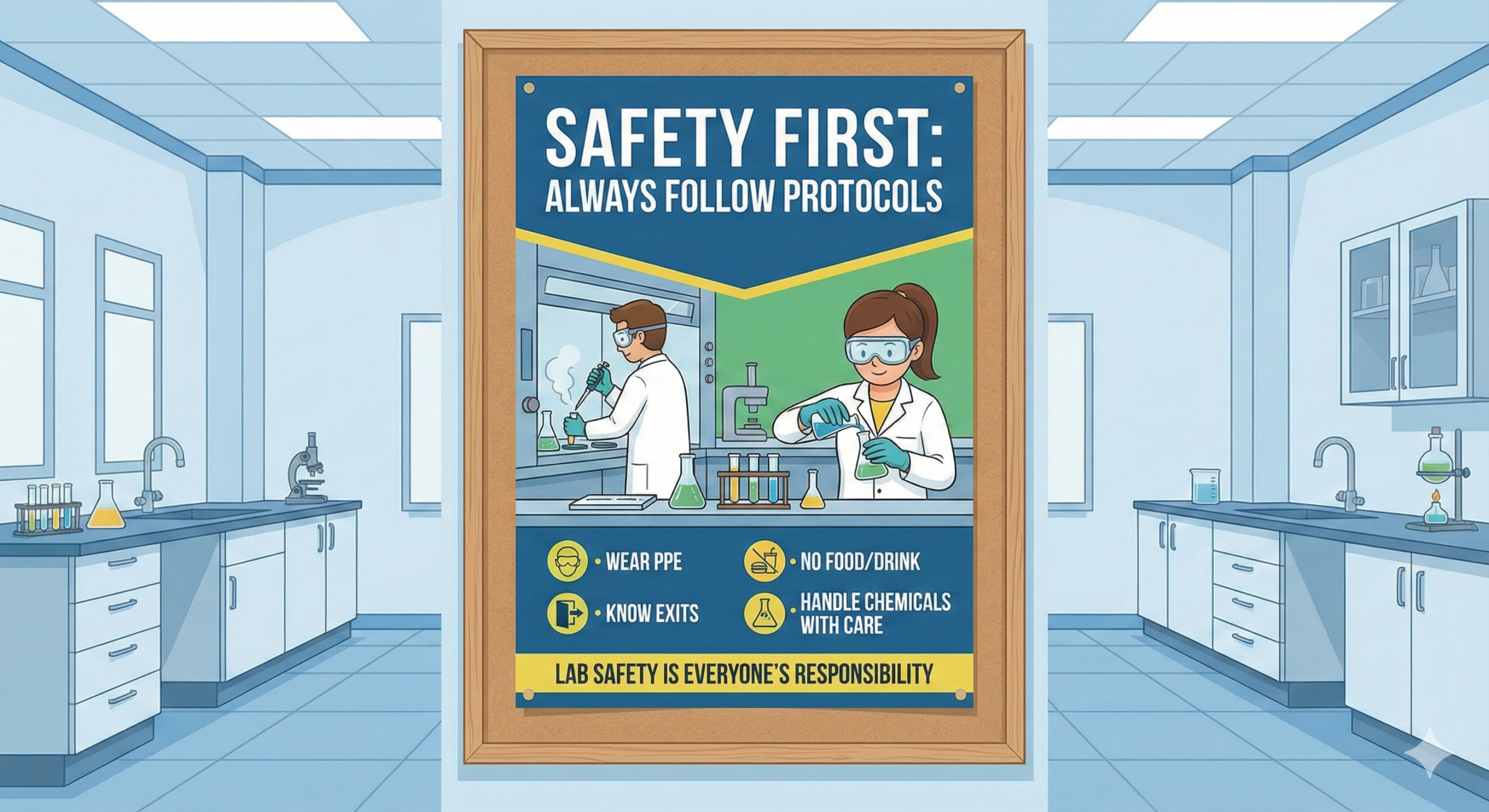
Follow these rules strictly to ensure safety:
- Dress appropriately: Wear goggles, gloves, closed shoes, and laboratory coats. Tie back loose hair.
- Know safety equipment: Locate the fire extinguisher and first aid kit.
- Do not eat or drink: Never taste or smell chemicals in the laboratory.
- The AW Rule: Never add water to concentrated acid. Always add Acid into Water (AW! Not WA!). Adding water to acid can cause an explosive reaction.
- Dispose properly: Put chemical wastes in designated containers, not the sink.
2. Safety Symbols and Hazard Signs
Labs are filled with symbols that warn us of danger. Here are some common ones:
Toxic / Poison
Flammable
Biological Hazard
Corrosive
High Voltage
Wear Eye Protection
3. Writing a Laboratory Report
A laboratory report is a written composition of results. It must be precise and clear. Key components include:
- Title: Name of experiment.
- Objective: Goal of the work.
- Materials: Equipment used.
- Procedure: Steps followed.
- Observation: What you saw.
- Conclusion: Final summary.
Activity 1: Safety Rules Quiz
Loading…
Activity 2: Symbols & Procedures
Loading…
Activity 3: Safe vs. Unsafe
Drag the actions to the correct category box below.
Actions Bank
Safe Practice
Unsafe Practice
Lesson Summary
The laboratory is a place of discovery but requires strict adherence to safety rules.
PPE (Personal Protective Equipment) like goggles and coats must be worn at all times.
Always add Acid to Water (AW), never the reverse.
Recognize hazard symbols like Toxic, Flammable, and Corrosive to avoid accidents.
A good Laboratory Report documents your experiment systematically, from Title to Conclusion.
Final Assessment
Loading…
1/5Competency Checklist
I can…